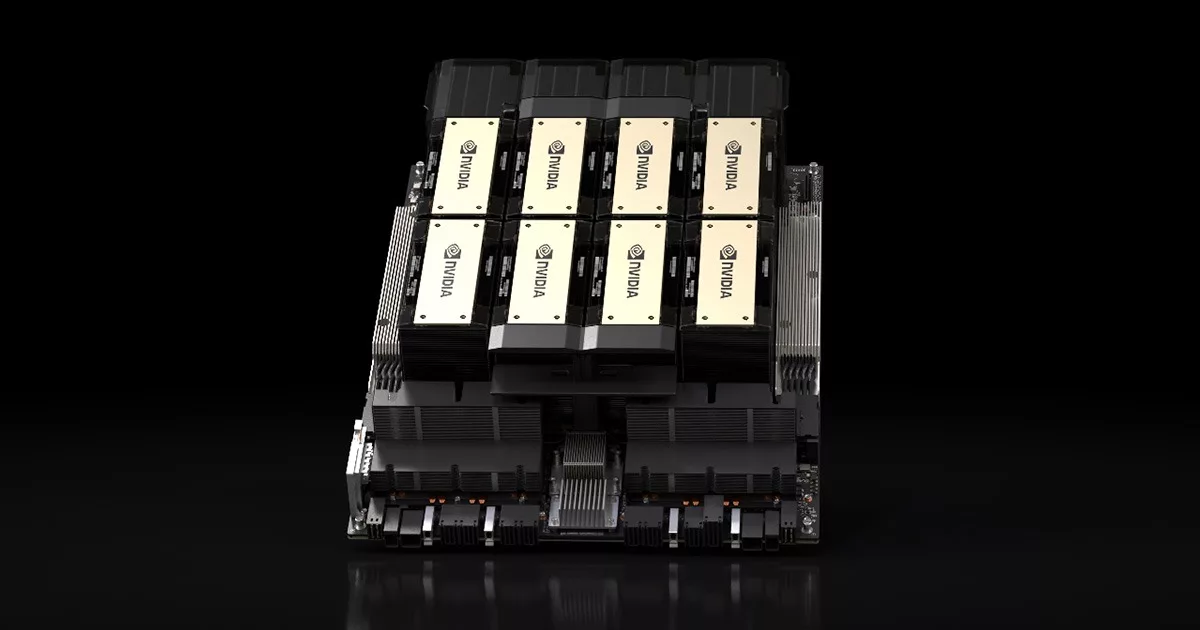

Nvidia has signed a letter of intent to evaluate a $500 million strategic investment in London-based AV startup Wayve. It’s a bet on “embodied AI” foundation models for driving—and a signal that Nvidia wants deeper influence over the software layer that turns its automotive silicon into revenue. As part of its broader strategy, Nvidia is also exploring advancements in NVIDIA Blackwell wafer production insights to enhance its overall chip manufacturing capabilities. This initiative aligns with their goals to remain competitive in the rapidly evolving tech landscape. By investing in both software and hardware, Nvidia aims to solidify its position as a leader in AI-driven automotive solutions.
- What’s new: Wayve says it signed an LOI with Nvidia to evaluate a $500 million investment for its next round; the companies have collaborated since 2018, and Wayve’s upcoming Gen-3 platform targets Nvidia DRIVE Thor (Blackwell-class) hardware. [Source: Wayve]
- Context: Reuters reports the discussions follow a broader £2 billion Nvidia pledge to the UK AI ecosystem. [Source: Reuters]
- Why it matters: If finalized, Nvidia tightens a hardware-plus-software flywheel in autonomy; Wayve secures long-run compute alignment and credibility with global OEMs.
Wayve’s AV2.0 thesis meets Nvidia’s platform play
Wayve’s approach swaps HD-maps and hand-coded heuristics for an end-to-end, data-centric foundation model that learns to drive from videos and interventions. That approach scales with data and accelerators—a sweet spot for Nvidia’s Blackwell automotive roadmap. If Wayve’s Gen-3 stack runs on DRIVE Thor, Nvidia wins silicon share, CUDA-adjacent lock-in, and telemetry that hardens its toolchain.
For the UK, anchoring a marquee AV model company with an Nvidia-backed war chest dovetails with the government’s push to commercialize autonomous services. It also gives European OEMs an alternative to U.S. robotaxi leaders while avoiding dependency on HD-map pipelines that struggled to scale beyond narrow ODDs.
Implications for OEMs and Tier-1s
Car makers juggling a patchwork of L2+/L3 features want software that can generalize across regions and platforms. Wayve’s hardware-agnostic marketing pitch becomes more credible when paired with Nvidia’s long-lived SOC roadmap and safety stack (DriveOS, HALOS). Expect tighter “reference design” offers: sensors, DRIVE Thor, Wayve AI Driver, data-ops, and validation tooling as a bundle.
Risks and reality checks
- Regulatory milestones: Moving from supervised L2+ to L3/L4 still hinges on certification regimes and safety case evidence. Foundation-model opacity remains a live issue for regulators.
- Data-scale economics: End-to-end models are data-hungry; the capex for fleet data, simulation, and labeling (where needed) will test unit economics.
- Competition: Waymo and Cruise pursue different stacks; Mobileye leans into REM and RSS; Tesla continues end-to-end with vertically integrated data ops. Each path trades explainability, ODD breadth, and time-to-market differently.
Bottom line
If the LOI advances to a signed round, Nvidia deepens a template: win the accelerator slot, then co-shape the software that makes the slot defensible. For Wayve, the upside isn’t just cash—it’s distribution leverage with OEMs that are already standardized on Nvidia in-vehicle compute.
Going deeper: See our explainer on why next-gen nodes matter to AI/AV silicon and our primer on right-sizing VRAM for AI workloads.