
Five Things You Should Know Before Reading:
- The arrest of co-founder Wally Liaw is not an isolated incident — it is the most serious escalation in a pattern of governance failures at Supermicro that stretches back nearly a decade
- The numbers need to be read carefully — $2.5 billion is what the Southeast Asian front company ordered from Supermicro over two years. Still, the confirmed amount the DOJ says was actually diverted to China is $510 million, and that distinction matters.
- This was allegedly happening while Supermicro was under active regulatory scrutiny — the export control scheme ran from 2024 to 2025, the same period EY resigned as auditor. The company was fighting to keep its Nasdaq listing.g
- Supermicro is not named as a defendant, nor is Charles Liang — but the board has serious questions to answer about what its compliance function was actually doing while all of this was allegedly going on.
- The AI infrastructure supply chain implications are real — Supermicro is a significant NVIDIA channel partner, and an alleged $510 million diversion of GPU-packed servers to China is exactly the kind of case regulators will use to tighten enforcement across the entire supply chain.
The Arrest: Federal Agents, Manhattan Court, and Servers Full of Nvidia Chips
On Thursday, federal agents arrested Yih-Shyan Liaw, known as Wally, the 71-year-old co-founder of Super Micro Computer, a senior vice president of business development, and a sitting board member of one of the most prominent AI server companies in the world. An indictment was unsealed in Manhattan federal court,t charging Liaw and two alleged co-conspirators with running a scheme to divert AI servers packed with restricted Nvidia GPU chips to China in violation of US export control laws. The two co-conspirators charged alongside Liaw are Ruei-Tsang Chang, known as Steven, a 53-year-old sales manager at Supermicro’s Taiwan office who, at the time of writing, remains a fugitive, and Ting-Wei Sun, known as Willy, a 44-year-old third-party broker and fixer who was also taken into custody on Thursday. All three face a maximum of 20 years in prison on the most serious charge of conspiring to violate the Export Controls Reform Act, plus additional counts of conspiracy to smuggle goods and defraud the United States government.
The scale needs to be understood correctly because two numbers are circulating, and they mean different things. The front company at the centre of the alleged scheme placed orders totalling $ 2.5 billion for Supermicro servers over the two-year conspiratorial period. The amount the DOJ specifically confirms was diverted to China is $510 million. Both numbers are significant, but they are not interchangeable, and the $510 million figure represents the servers the DOJ can directly tie to confirmed diversions to Chinese end users rather than the total transaction volume flowing through the front company.
What the DOJ is describing is not a case of a mid-level employee cutting corners on a shipping manifest. This is a two-year operation involving fake purchase orders, forged end-user documents, a Southeast Asian front company used to obscure the true destination, physical dummy servers staged in a warehouse specifically to pass US government audits, serial number stickers removed with a hair dryer and reapplied to unmarked boxes, and encrypted messaging apps used throughout to coordinate quantities, delivery locations in China, and methods for keeping the entire operation hidden from Supermicro’s own compliance team. According to the DOJ, surveillance cameras filmed the defendants directly carrying out parts of this.
The pipeline allegedly worked like this. Liaw and Chang would direct executives at the unnamed Southeast Asian company to place purchase orders with Supermicro, making it appear the servers were destined for that company’s legitimate operations. The servers would be assembled in the US, shipped to Supermicro’s facilities in Taiwan, and then handed off to the Southeast Asian company at a separate location. From there, a logistics company would remove the identifying packaging, put the servers in unmarked boxes, and forward them to their actual destination in China. To prevent Supermicro’s compliance team from flagging the transactions, fake documentation and false communications were generated throughout to maintain the fiction that the Southeast Asian company was the real end buyer.
The operation reportedly became more aggressive rather than more cautious over time. During three weeks from late April to mid-May 2025, the DOJ alleges that roughly half a billion dollars’ worth of servers assembled in the US were shipped to China. When a US Department of Commerce audit was conducted, the defendants allegedly staged thousands of physical dummy servers at the Southeast Asian company’s warehouse, with surveillance footage reportedly showing defendants removing and reapplying serial number labels with a hair dryer and repackaging the dummies to fool the inspection. The real servers were already in China. According to the indictment, Chang specifically arranged for what he called a “friendly” auditor to conduct the review, keeping inspectors away from parts of the data centres where the absence of the real servers would have been obvious.
There are two details from the indictment that tell you something important about the state of mind of the people allegedly running this. In 2025, Liaw sent a company executive a link to a White House statement on an upcoming AI export rule, saying the pace of shipments would need to increase before the rule took effect. He was not concerned enough about being caught to slow down. He was accelerating. Then, when a broker sent Liaw a text message containing a link to a news story about Chinese nationals being arrested for smuggling AI chips into China, Liaw allegedly responded with sobbing emojis. Not a plan to stop. Sobbing emojis.
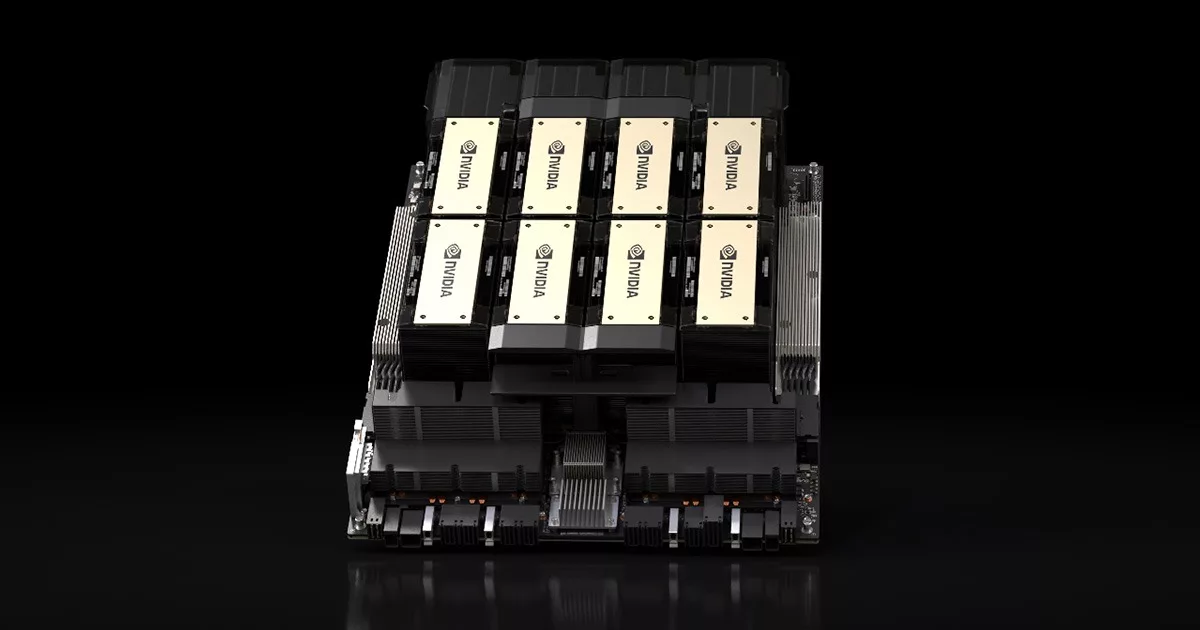
The chips inside the servers have not been officially named in the DOJ indictment, which refers only to a US manufacturer. The company itself names Supermicro in its own statement, which confirms the roles of the individuals charged, and Supermicro’s products are predominantly built around Nvidia silicon. NVIDIA’s response was careful and correct, emphasising that compliance is a top priority, that unlawful diversion of controlled systems is a losing proposition, and that NVIDIA does not provide service or support for such systems. That is the right statement to make, and Nvidia’s own export control processes are separate from what a channel partner does with assembled systems after they leave the factory. But the photograph of Jensen Huang shaking hands with Supermicro CEO Charles Liang at GTC this week, with Liaw standing nearby, has already circulated widely, and the reputational proximity is uncomfortable regardless of legal separation.
Supermicro is not a defendant. Charles Liang is not named in the indictment. The company’s statement placed Liaw and Chang on administrative leave, terminated Sun’s contracting relationship, and described the alleged conduct as a direct contravention of company policies and compliance controls. The stock dropped roughly 25 percent in after-hours trading on Thursday. Liaw’s personal stake in Supermicro is approximately $464 million.
The Background: This Company Has Been Here Before
What makes Thursday’s arrest so significant is not just the scale of the alleged offense. It is that Supermicro arriving at this point is not remotely surprising to anyone who has been paying close attention to the company’s governance history over the last several years. The current situation is the most serious escalation yet in a pattern that started nearly a decade ago and has never fully resolved despite multiple opportunities to do so.
The first chapter opened in 2018, when Supermicro fell out of compliance with Nasdaq listing standards while the SEC investigated its accounting practices. Liaw resigned from all his positions at the company that year, following a related internal audit committee investigation into financial reporting. The company’s stock was suspended from trading. In 2020, Supermicro agreed to pay a $17.5 million SEC penalty, and its CFO resigned as part of the settlement. The SEC found the company had engaged in improper revenue recognition practices, pulling forward revenue to hit financial targets in ways that misrepresented actual performance.
That should have been the line in the sand. It was not. Liaw was back at Supermicro in May 2021 as an adviser in business development, a role that gave him retained influence and access without the formal designation that might have attracted regulatory attention. He returned to a senior executive role and rejoined the board of directors in December 2023, just three years after the company had paid its SEC penalty. The same co-founder who had resigned during the first accounting investigation was now sitting on the board of a company riding the AI server boom to Fortune 500 status and billions in market capitalisation. The board saw no problem with any of this.
This matters because subsequent reporting suggests the underlying problems never actually went away. A former Supermicro salesperson told Hindenburg Research in August 2024 that essentially the same people responsible for the first time around had come back and that the company had reverted to many of the same practices. Whether that characterisation holds up under full legal scrutiny is a separate question. Still, the structural reality is that Supermicro allowed the architect of its first governance failure to return to an increasingly senior role over three years without any apparent concern about what that signalled internally or externally.
The 2024 Crisis: EY Walks Out Mid-Audit
The second chapter began in August 2024 when Hindenburg Research published a detailed report alleging that Supermicro’s accounting irregularities had returned, that the company had engaged in related-party self-dealing through supplier relationships connected to Liang family members, and that export control violations had occurred involving shipments to sanctioned or restricted destinations. Supermicro denied the allegations. The stock fell sharply and kept falling.
What followed was more damaging than the Hindenburg report itself. Ernst and Young, one of the Big Four accounting firms and Supermicro’s auditor of record, sent a letter to the board’s audit committee flagging serious concerns about governance, transparency, and internal controls. The board’s response was to appoint a special committee and bring in outside legal counsel and forensic accounting firm Secretariat Advisors to investigate. Then, in October 2024, during the active audit, EY resigned.
The language of EY’s resignation was not the careful, hedged language that professional services firms typically use when extracting themselves from a difficult client. EY stated directly that it could no longer rely on the representations of management or the audit committee, and that it was unwilling to be associated with the financial statements management had prepared. That is the auditor equivalent of flipping the table on the way out. For a public company, losing your auditor mid-engagement with that kind of language attached to the departure is a five-alarm governance event. It also created an immediate practical problem, because without an auditor, Supermicro could not file its fiscal 2024 annual report or subsequent quarterly filings, putting it at real risk of a second Nasdaq trading suspension in six years.
The company scrambled. In November 2024, Supermicro hired BDO USA as a replacement auditor and submitted a compliance plan to Nasdaq, which bought it time. In December 2024, the special committee, which consisted of a single independent board member working with outside counsel, concluded its investigation and found no evidence of fraud or misconduct. The committee characterised EY’s decision to resign as not supported by the facts. Liang declared publicly that the company was out of the woods. CFO David Weigand, who had been recommended for departure in the committee’s own report despite the no-fraud conclusion, called the entire episode a distraction. Weigand subsequently left the company.
Supermicro filed its delinquent annual and quarterly reports in February 2025. The SEC closed its investigation without action. Nasdaq compliance was restored. By spring 2025, the company was presenting itself as having put a difficult period behind it and getting back to the business of building AI servers.
The Timeline Problem
Here is what makes Thursday’s indictment so uncomfortable for that narrative. The DOJ alleges the export control scheme was active during 2024 and 2025. Not before the Hindenburg report. Not before EY’s departure. During those events, and continuing after the special committee found no evidence of fraud,d and after the company told the market the matter was resolved.
The period during which Supermicro’s compliance function was supposedly being strengthened, during which the company was cooperating with forensic accountants and outside legal counsel, during which it was fighting to retain its Nasdaq listing and replace its auditor, was apparently also the period during which a co-founder and a Taiwan sales manager were allegedly running a scheme to route hundreds of millions of dollars in GPU-packed servers to China through a Southeast Asian front company and staging dummy hardware in warehouses to fool US government inspectors.
EY said in October 202that 4 it could no longer rely on management’s representations. The DOJ alleges the scheme was running throughout the same period. The connection between those two facts is not something a single board member’s special committee finding no evidence of fraud resolves, and the characterization of EY’s resignation as not supported by the facts looks considerably harder to defend now than it did in December 2024.
What This Means for the AI Infrastructure Market
Supermicro is a significant node in the AI server supply chain. It is not a chip designer. It is a system integrator and server manufacturer, but in the current market,t that is an enormously important function. The ability to take Nvidia’s GPUs and the associated networking and memory components and turn them into deployable rack-scale infrastructure at volume and speed is genuinely valuable, and Supermicro has been one of the companies that hyperscalers and enterprise customers have relied on to do that. If the company’s operational stability and compliance posture deteriorate further as a result of the current situation, that creates a supply chain disruption that affects customers well beyond Supermicro’s own shareholders.
The export control dimension matters in the current geopolitical environment beyond just this one company. The US government has spent the last two years constructing an increasingly detailed and enforced set of restrictions on the export of advanced AI compute to China, and enforcement has been a stated priority for both the Commerce Department and the DOJ. An alleged $510 million scheme to route restricted AI servers to China through a front company and forged documents, running for two years and involving a sitting board member of the supplying company, is exactly the kind of case regulators will use to demonstrate that enforcement is real and that penalties are severe. Every company in the AI hardware supply chain should expect tighter compliance scrutiny and heavier documentation requirements. The Southeast Asia transshipment loophole, which this scheme allegedly exploited, is now in the spotlight, and regulators across multiple jurisdictions will be looking at it.
The Bottom Line
Supermicro has now had two separate SEC accounting investigations, paid a $17.5 million penalty, lost one of the Big Four mid-engagement with an unusually direct statement of distrust attached to the departure, filed delinquent financial reports across multiple quarters, replaced its CFO, and had its co-founder arrested on export control charges involving an alleged $510 million diversion of GPU servers to China using dummy hardware, forged documents, a friendly auditor, and sobbing emojis as the risk management strategy.
The company’s consistent position throughout has been that each episode is either the result of individual misconduct rather than systemic failure, a distraction from the underlying business, or simply unsupported by the facts. That position may be legally defensible on any individual charge. As a characterisation of what has happened at Supermicro across nearly a decade, it is not credible. The pattern is the story. And the arrest of Wally Liaw is not the end of it.